
David L Moss Inmate Lookup is a public record search system used to find basic inmate information within the Tulsa County jail database. It supports common searches like inmate search Tulsa and Tulsa jail lookup, helping users check custody details, booking records, and jail roster information. The main purpose of this system is to provide quick and clear access to inmate-related public records in an organized format. It also helps users understand recent arrests and current detention status simply. Records are updated based on jail intake and custody changes.
This page explains how the system works and what type of data it shows, including inmate directory entries, jail roster details, custody status updates, booking information, and arrest records. It also helps users understand how to use the inmate lookup tool effectively and interpret search results correctly. Each section is structured to provide clear, useful information for anyone trying to locate or verify inmate records in the Tulsa County jail system. Users can also learn how booking numbers, arrest dates, and search filters affect results. The content is arranged to support easy reading and better search understanding.
How to Search for an Inmate
A David L Moss Inmate Lookup system allows the public to find inmate details inside the Tulsa County jail database. Users can complete an inmate search Tulsa process by entering basic details into an inmate lookup tool. The system shows records like booking info, custody status, and arrest record data. It works as a digital inmate locator connected with Tulsa jail records.
- Official Search
- https://iic.tulsacounty.org/
Search by Name
Searching by name is the most used method in the Tulsa jail lookup system. Users enter the first and last name of the person to pull matching records from the database. The system compares the input with the inmate directory and displays possible matches. Small spelling differences can change results, so correct spelling matters.
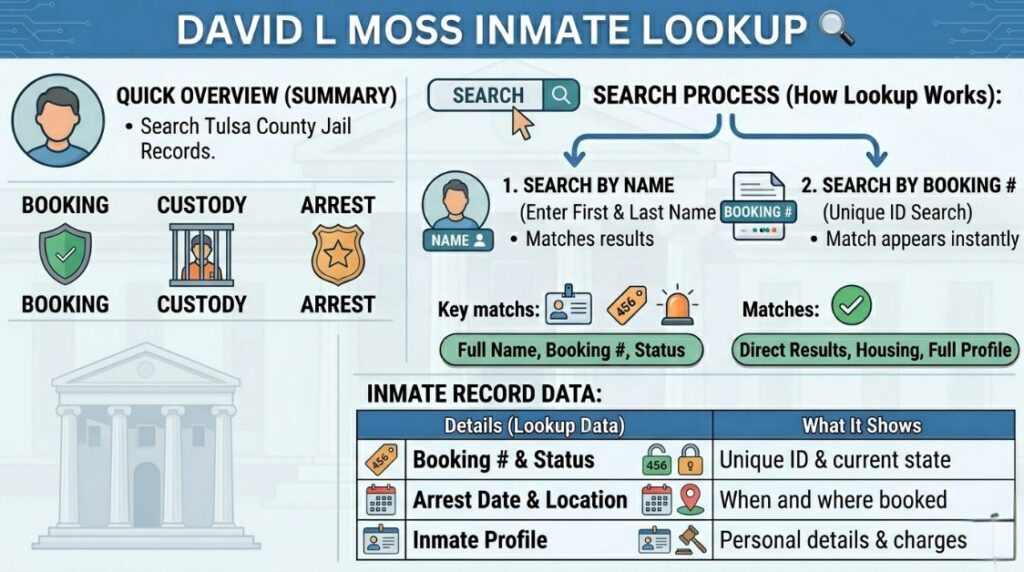
Steps used in name search:
- Enter your first name in the search box
- Enter last name for accurate matching
- Review matching inmate records
- Select the correct profile from the results
This method often shows:
- Full name
- Booking number
- Custody status
- Arrest record summary
Many users prefer name-based search because it works even without booking details.
Search by Booking Number
A booking number search provides more direct results inside the inmate lookup tool. Each inmate receives a unique number at the time of booking. This method reduces confusion when multiple people share similar names in the Tulsa jail lookup system.
Booking number search flow:
- Enter the booking number in the search field
- Match appears instantly if a record exists
- Open inmate profile for full details
This method displays:
- Arrest record data
- Custody status updates
- Booking info
- Housing location
The booking number search gives higher accuracy compared to the name search.
Search by Date of Arrest
Date-based search helps when only timing details are known. The system filters records using arrest dates stored in the inmate locator database. This method is useful for tracking recent entries in jail records.
How date search works:
- Select arrest date or date range
- System filters matching inmate records
- Results show all bookings from that time period
This search type often shows:
- Recent booking info
- Arrest record list
- Inmate directory entries
- Custody status updates
It helps users who remember when the arrest happened, but not full identity details.
Inmate Records, Charges, and Custody Details
A David L Moss Inmate Lookup search can return several details about a person currently held in custody or recently booked into the facility. Search results often include booking info, custody status, charges, bond amount, court dates, and release information, helping users verify a person’s current jail record. The exact details shown may vary by record. Still, most results provide enough information to identify an inmate and review key custody-related updates.
Booking and Inmate Identification
After a successful search, one of the first items displayed is the inmate’s basic identification record. This section helps users confirm that they have located the correct person within the inmate directory.
Information may include:
- Full legal name
- Booking number
- Booking date and time
- Age and gender
- Housing location
- Custody status
The booking info section serves as the foundation of the inmate record. For example, the booking number acts as a unique identifier and is often used for future searches.
| Record Detail | Purpose |
|---|---|
| Full Name | Identifies the inmate |
| Booking Number | Unique inmate record number |
| Booking Date | Shows when custody began |
| Housing Unit | Indicates inmate location |
| Custody Status | Displays current custody condition |
These details help family members, attorneys, and interested parties verify inmate records more accurately.
Charges, Bond Amount, and Court Dates
Search results frequently include legal information connected to an inmate’s current case. This section gives users a clearer picture of why a person is being held.
Important legal details may include:
- Charges filed during booking
- Bond amount or bail information
- Scheduled court dates
- Case-related updates
- Hold or detainer notices
Charges may range from minor offenses to more serious allegations. The bond amount indicates the financial requirement set by the court for possible release before trial.
Custody Status and Release Information
The custody status section shows whether an inmate remains in custody, has been transferred, or has been released. Many users search inmate records primarily to check this information.
Status updates may include:
- In Custody
- Released
- Transferred
- Awaiting Court Appearance
- Held Without Bond
Some records may contain release information, including a release date or release reason if that data is available. Since jail records change throughout the day, status updates can be revised as new information enters the system.
Current Jail Roster
The jail roster is a record that shows people who are currently held at the David L. Moss Criminal Justice Center. It helps users review available inmate details, custody status, booking information, and other detention records that may appear in the system. A jail roster serves as an organized inmate directory that lists people who are in custody at a particular facility. For those using a Tulsa jail lookup, the roster acts as a starting point for locating current inmates and reviewing basic information linked to their detention status. The information displayed can vary based on system updates and record availability.
How the Jail Roster Is Organized
The jail roster is structured to help users locate records more efficiently. Most roster systems arrange information in a searchable format, making it easier to review active inmates and related detention records.
Details that may appear include:
- Inmate name
- Booking date
- Booking number
- Custody status
- Housing location
- Criminal charges
- Bond information
- Court-related details
Many users check the roster to confirm whether a person is currently being held in custody or has recently entered the facility. A searchable inmate directory can save time by grouping records into a single location.
Jail Roster Updates and Record Changes
Information within the roster can change as inmate records are processed. New arrests may be added after booking procedures are completed, and records may be removed or updated after release, transfer, or court action.
| Record Type | Possible Update |
|---|---|
| New Booking | Added to the inmate list |
| Release | Custody status updated |
| Transfer | Housing or facility details changed |
| Court Action | Charges or case information updated |
Since detention records are updated at different times, temporary delays may occur between an event and its appearance in the system. For that reason, users often review both the jail roster and related booking information when performing a Tulsa jail lookup. This approach provides a clearer view of active inmates and the most current information available within the facility’s inmate directory.
Booking Records and Arrest
Booking records and arrest information provide details about a person’s entry into custody, current detention status, and related case information. Through a David L Moss Inmate Lookup search, users can review available booking info, arrest records, and other custody-related details connected to an inmate record. Booking records are created during the intake process after a person arrives at the facility. These records help document key facts about the arrest and create an official detention record. A Tulsa jail lookup search often uses this information to identify inmates and display their current custody status.
The booking process creates a record that can include several pieces of information:
- Full inmate name
- Booking number
- Booking date and time
- Charges filed at booking
- Custody status
- Housing assignment
- Bond information, if available
- Arresting agency
This information helps family members, legal representatives, and members of the public locate inmate records more efficiently.
What Information Appears in Booking Records?
Booking records serve as a snapshot of a person’s status after detention booking. The information available can vary based on record availability and local policies. In many cases, a booking record may include details that help identify an inmate and track their progress through the detention system.
| Record Type | Description |
|---|---|
| Booking Number | Unique identification number assigned during intake |
| Booking Date | Date and time the inmate entered custody |
| Charges | Offenses listed at the time of booking |
| Custody Status | Current detention or release status |
| Bond Details | Bond amount and related information |
| Arresting Agency | The law enforcement agency is involved in the arrest |
Many users perform a Tulsa jail lookup to verify recent detention activity, review booking info, or confirm that an inmate has been entered into the jail database.
Arrest Records and Arrest History
Arrest records document law enforcement actions that lead to custody and detention. These records may show information related to the arrest event, including charges, arrest dates, and agency involvement. In some situations, an inmate’s arrest history may contain multiple booking events that occurred at different times.
A search through inmate records can help identify:
- Recent arrests
- Previous detention bookings
- Charge information
- Custody updates
- Release or transfer activity
Since jail databases receive updates throughout the day, newly arrested persons may not appear immediately after booking. Record availability often depends on processing times, verification procedures, and data updates within the facility’s system.
Why an Inmate May Not Appear in Search
An inmate may not appear in search results if the record has not been updated yet, the person has been moved to another facility, or the search details contain an error. In many cases, a missing result does not mean the person was never booked into custody. People using an inmate search Tulsa tool often expect records to appear immediately after an arrest. Yet jail databases require time to process new information. Record updates can vary based on booking activity, system updates, and administrative procedures. A search performed shortly after an arrest may return no results even though the inmate is currently in custody.
Common Reasons an Inmate Is Not Found
Several factors can affect search results:
- Data delay after a recent booking
- Spelling mismatch in the inmate’s first or last name
- An incorrect booking number was entered during the search
- Recent transfer to another detention facility
- Temporary record processing or verification
- Changes in the inmate’s release status
A small spelling error can prevent a successful search. For example, missing a middle name, suffix, or alternate spelling may cause the system to return no matches.
| Possible Issue | Effect on Search Results |
|---|---|
| Data delay | The record may not appear immediately |
| Spelling mismatch | Search may return zero results |
| Transfer cases | Record may move to another facility database |
| Release status update | Inmate may no longer appear in active custody records |
| Incorrect search details | System may not find a matching record |
How Transfer Cases and Release Status Affect Results
Many inmate finder systems only display people currently housed in a specific facility. If an inmate is transferred to another jail, detention center, or correctional institution, the original search database may no longer show that record. Release activity can create similar results. Once a person is released, the record may move from the active jail roster to archived or historical records. For that reason, checking search details carefully and repeating the search after some time often produces more accurate results. When search issues continue, reviewing multiple identifiers, such as the inmate’s full legal name and booking information, can help locate the correct record and confirm current custody status.
Custody Status and Release Information
Custody status shows whether a person is currently in custody, has been released, or has another detention-related status. Release information provides details about a person’s custody outcome, release date, bond release, transfer, or other changes in detention records. Checking custody status helps users confirm a person’s current detention status. It can show whether the inmate remains housed at the facility, has been transferred, or is no longer part of the active jail population. Since jail records change throughout the day, status information may update after court appearances, bond payments, or housing changes.
What Custody Status Means
A custody status entry reflects an inmate’s current standing within the correctional system. The information available may vary by record source, though several common status types appear in most inmate databases.
Custody status descriptions include:
- In Custody: The inmate remains housed in the facility.
- Released: The inmate is no longer in jail custody.
- Transferred: The inmate moved to another detention facility.
- Held for Court: The inmate is awaiting a scheduled hearing.
- Bond Posted: Release occurred after bond requirements were met.
These status updates help families, attorneys, and interested parties track detention changes more accurately.
Release Information and Detention Outcome
Release information explains how a detention period ended or changed. A detention outcome may occur for several reasons, and each case follows its own legal process.
| Release Type | Description |
|---|---|
| Bond Release | Release after bond payment or approval |
| Court-Ordered Release | Release directed by a judge |
| Time Served | Release after sentence completion |
| Transfer Release | Movement to another facility |
| Parole Release | Release under supervision requirements |
A parole status record may appear when a person leaves custody under specific supervision conditions. In such cases, reporting requirements and legal restrictions may continue after release.
Factors That Can Affect Status Updates
Custody records do not always update instantly. Several events can affect when information appears in search results:
- Court hearings and judicial decisions
- Bond processing and verification
- Facility transfers
- Administrative record updates
- Release paperwork completion
For this reason, a recent arrest or release may not appear immediately. Checking records again after some time often provides the most current custody status and release information available.
Custody Status and Release
Custody status shows whether a person is currently in custody, has been released, or has another detention-related status. Release information provides details about a person’s custody outcome, release date, bond release, transfer, or other changes in detention records. Checking custody status helps users confirm a person’s current detention status. It can show whether the inmate remains housed at the facility, has been transferred, or is no longer part of the active jail population. Since jail records change throughout the day, status information may update after court appearances, bond payments, or housing changes.
What Custody Status Means
A custody status entry reflects an inmate’s current standing within the correctional system. The information available may vary by record source, though several common status types appear in most inmate databases.
Custody status descriptions include:
- In Custody: The inmate remains housed in the facility.
- Released: The inmate is no longer in jail custody.
- Transferred: The inmate moved to another detention facility.
- Held for Court: The inmate is awaiting a scheduled hearing.
- Bond Posted: Release occurred after bond requirements were met.
These status updates help families, attorneys, and interested parties track detention changes more accurately.
Release Information and Detention Outcome
Release information explains how a detention period ended or changed. A detention outcome may occur for several reasons, and each case follows its own legal process.
| Release Type | Description |
|---|---|
| Bond Release | Release after bond payment or approval |
| Court-Ordered Release | Release directed by a judge |
| Time Served | Release after sentence completion |
| Transfer Release | Movement to another facility |
| Parole Release | Release under supervision requirements |
A parole status record may appear when a person leaves custody under specific supervision conditions. In such cases, reporting requirements and legal restrictions may continue after release.
Factors That Can Affect Status Updates
Custody records do not always update instantly. Several events can affect when information appears in search results:
- Court hearings and judicial decisions
- Bond processing and verification
- Facility transfers
- Administrative record updates
- Release paperwork completion
For this reason, a recent arrest or release may not appear immediately. Checking records again after some time often provides the most current custody status and release information available.
Bond, Court Dates, and Legal Process
Bond information helps determine whether an inmate may be released before trial, often after paying a set amount or meeting court requirements. Court dates are scheduled hearings where judges review charges, bond conditions, case progress, and other legal proceedings. After an arrest, a person may enter the jail system and wait for a court appearance. During this period, bond information and court dates become key parts of the inmate record. These details help families, attorneys, and interested parties track a case through the legal process.
Bond Information and the Bail Process
Bond information refers to the amount of money or conditions required for temporary release from custody. The bail process allows some defendants to remain out of jail while their case moves through the court system.
Several factors may affect bond decisions, including:
- The severity of the charges
- Prior criminal history
- Risk of failing to appear in court
- Public safety concerns
- Existing warrants or pending cases
Bond types include:
| Bond Type | Description |
|---|---|
| Cash Bond | Full amount paid directly to the court |
| Surety Bond | A bail bond company guarantees payment |
| Property Bond | Property is used as collateral |
| Personal Recognizance Bond | Release based on a promise to appear in court |
Bond amounts can change after a court review. For that reason, the most current records should always be checked before making decisions.
Court Dates and Hearing Schedule
Court dates are scheduled appearances where a judge reviews different parts of a case. A hearing schedule may include several court appearances before a final resolution.
Typical hearings may involve:
- Initial appearance
- Bond hearing
- Arraignment
- Pretrial conference
- Motion hearings
- Trial proceedings
Each hearing serves a different purpose. Some focus on bond conditions, whereas others address evidence, plea agreements, or trial preparation.
Legal Proceedings and Case Progress
The legal process often continues for weeks or months after booking. During these legal proceedings, courts review evidence, hear arguments, and make decisions based on applicable laws.
Linked to court activity may include:
- Case number
- Court location
- Scheduled hearing dates
- Charge descriptions
- Bond status
- Judge assignments
- Disposition updates
Checking bond information and court dates regularly can help track case developments and custody changes. Since schedules may change, court records and jail records are often updated throughout the case lifecycle.
Mugshots and Booking Photos
Mugshots and booking photos are images taken during the jail intake process after an arrest. These photos become part of an inmate’s booking info and help create official identification records used by correctional staff and law enforcement agencies. Booking photos serve as a visual record of a person at the time of admission into custody. In many cases, these booking images are linked to arrest details, inmate status, and other information stored in jail databases. The purpose is to help verify identity and maintain accurate records throughout the detention process.
How Mugshots Relate to Arrest Records
Mugshots are often connected to an inmate’s arrest records and booking file. A booking file may contain several pieces of information, including:
- Full name
- Booking number
- Arrest date and time
- Criminal charges
- Custody status
- Housing location
- Court-related details
These records help agencies keep track of inmates from intake through release. At the same time, record availability can vary based on local policies, legal restrictions, and record update schedules.
What Booking Photos Show
A standard booking photo usually includes front-facing and side-profile images. These photographs become part of official identification records and assist with inmate verification during housing assignments, court appearances, transfers, and release procedures.
| Record Type | Purpose |
|---|---|
| Booking Images | Visual identification |
| Arrest Records | Details of the arrest event |
| Booking Info | Intake and custody data |
| Identification Records | Identity verification and tracking |
Since record systems update at different times, newly arrested inmates may not have booking photos available immediately. In some cases, images appear after processing is completed and the inmate record is updated within the jail system.
Jail Rules, Visitation, and Communication
People using a Tulsa jail lookup or inmate finder often need more than custody details. They may need information about visits, mail, phone services, and commissary options that help inmates stay connected with family and friends. Communication policies help maintain safety inside the facility. At the same time, approved contact methods allow inmates to keep in touch with loved ones and manage basic personal needs during confinement.
Visitation Rules and Visitor Requirements
Visitation policies vary based on housing assignments, security levels, and facility operations. Visitors typically need approval before scheduling a visit, and identification is usually required upon arrival.
Visitation rules may include:
- Presenting a valid photo ID
- Following approved visiting hours
- Passing security screening procedures
- Wearing appropriate clothing
- Following staff instructions during the visit
Missed appointments, prohibited items, or rule violations can result in denied visitation privileges. Checking current visitation requirements before traveling can help prevent delays.
Mail System and Phone Calls
The facility’s mail system allows inmates to receive letters and approved correspondence. Mail is commonly reviewed for security purposes before delivery. Items that do not meet facility requirements may be returned or rejected. Inmates can usually communicate through approved phone calls. Calls are often monitored and recorded for safety reasons. Family members and friends may need to create accounts through authorized communication providers before receiving calls.
The table below highlights common communication methods:
| Communication Method | Typical Purpose |
|---|---|
| Personal letters and approved documents | |
| Phone Calls | Contact with family, friends, or legal representatives |
| Video Visits | Remote communication when available |
Commissary and Inmate Services
Many facilities provide a commissary program that allows inmates to purchase approved items. Funds are generally deposited into an inmate’s account by family members or friends.
Commissary purchases may include:
- Personal hygiene products
- Writing materials
- Snacks and beverages
- Approved clothing items
- Basic comfort items
These services support daily needs and provide a structured way for inmates to maintain communication and obtain approved personal supplies during their stay. Anyone using a Tulsa jail lookup system can often find related custody details and booking information before arranging contact with an inmate.
Contact Information
If you are using the David L Moss Inmate Lookup to find details about an inmate, having the right contact information for the facility can save time and reduce frustration. Whether you have questions about visitation, mail, or inmate status, the details below will help you reach the correct department quickly.
Main Facility Contact Details
- Facility Name: David L. Moss Criminal Justice Center
- Physical Address: 555 N Denver Ave, Tulsa, OK 74103
- Main Phone Line: (918) 596-8900
- Official Website: Tulsa County Sheriff’s Office
Frequently Asked Questions
Many people use the David L Moss Inmate Lookup system to locate inmate records, review booking information, and check current custody details. The following questions address common concerns related to inmate search Tulsa, inmate lookup tool services, jail roster updates, and inmate status information.
How Can an Inmate Be Found?
An inmate can usually be located by using an inmate lookup tool and entering identifying information such as a full name or booking details. Search results may display booking information, housing location, charges, and current custody status. Accurate spelling is important since even a small error can affect search results, and recently booked inmates may take some time before appearing in the database.
Is the Inmate Lookup Free?
Most inmate search systems provide basic record searches without charging a fee. Users can often review public inmate information, booking records, and status details through available databases. Some third-party websites may offer additional reports for a fee, though many public record searches remain available at no cost through official correctional record systems.
How Often Is the Jail Roster Updated?
The timing of jail roster updates varies depending on the facility and its record management process. Many correctional facilities update inmate records throughout the day to reflect new bookings, transfers, bond changes, housing assignments, and release activity. Since updates can occur at different intervals, information displayed in a search result may change later in the same day.
Why Is an Inmate Not Found in Search Results?
An inmate may not appear in search results if the booking was processed recently, if the search information contains a spelling error, or if the inmate has been transferred or released. Record updates can sometimes take time to appear in public systems, which means a search performed immediately after an arrest may not return results even though the inmate is currently in custody.
Can Mugshots Be Viewed Through the Inmate Lookup System?
Mugshot availability depends on local policies and public record practices. Some inmate databases display booking photographs alongside arrest and booking information, while others only provide written inmate records. When available, mugshots are typically connected to booking details, charges, and identification records within the inmate profile.
What Does Custody Status Mean?
The term custody status describes an inmate’s current standing within the correctional system and helps users determine whether a person remains housed at the facility. Status information may indicate that an inmate is in custody, released, transferred, or awaiting release processing, and these records can change as court proceedings, transfers, or release timing events occur.